How To Keep Your Home Cool In A Heatwave This Year?
When the sun beats down hard, figuring out How to Keep Your Home Cool in a Heatwave This Year can feel like a big puzzle, especially if you’re just starting. You might worry about high energy bills or just feeling plain uncomfortable. But don’t fret!
We’re going to break it down into easy steps that anyone can follow. Get ready to discover simple tricks that will make your home a cool haven, even when it’s blazing hot outside. We’ll cover simple changes you can make right away and smarter ways to use what you already have.
Key Takeaways
- You can lower your home’s temperature without expensive equipment by using smart window coverings.
- Simple fan tricks can make a big difference in how cool you feel.
- Managing airflow is key to keeping hot air out and cool air in.
- Natural methods can help cool your home’s surfaces and the air inside.
- Keeping up with small maintenance tasks helps your cooling systems work better.
- Quick changes can significantly improve your comfort during hot weather.
Simple Ways to Beat the Heat
This section looks at easy and quick things you can do to make your home feel cooler. It covers how to use your windows, doors, and everyday items to your advantage. We’ll explore ways to block out the sun and keep the hot air from getting inside in the first place.
These are the first lines of defense when the temperature climbs.
Smart Window Coverings
Windows can let in a lot of heat, even when they are closed. Sunlight shining through glass acts like a greenhouse, warming up your rooms. Covering them up is a very effective way to stop this.
It’s like putting on sunglasses for your house.
-
Close Blinds and Curtains During the Day: During the hottest parts of the day, especially when the sun is directly hitting your windows, keeping your blinds and curtains closed can block a lot of heat. Light-colored curtains are especially good because they reflect sunlight away. Darker colors can absorb heat and make the room warmer, even if they block the light.
-
Use Reflective Films or Sheets: You can buy special films that stick to your windows and reflect sunlight. Another simple trick is to hang up reflective blankets or even aluminum foil from the outside of your windows. This bounces the sun’s rays back before they can heat up your glass and your home.
-
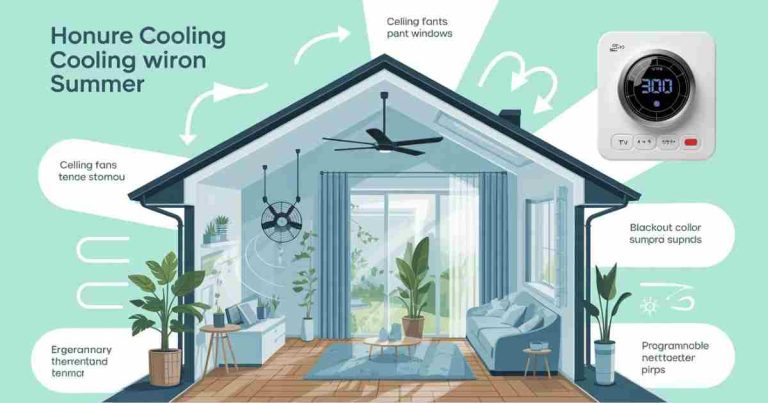
Install Blackout Curtains: These are thicker curtains designed to block out almost all light. They are great for keeping a room dark and cool. They create a barrier that stops heat from entering through the windows, making a noticeable difference in temperature.
Strategic Use of Fans
Fans don’t actually cool the air, but they make you feel cooler by moving air across your skin. This helps your sweat evaporate, which is your body’s natural cooling process. Using fans smartly can make a big difference without using much electricity.
-
Create a Cross-Breeze: Open windows on opposite sides of your house and place fans in them to push hot air out or pull cooler air in. If it’s cooler outside, like in the evening, set up a fan facing out of a window upstairs to push hot air up and out, and open windows downstairs to let cooler air flow in.
-
The “Bowl of Ice” Trick: Place a bowl of ice or a frozen water bottle in front of a fan. As the ice melts, the fan will blow cooler, slightly moist air into the room. This can make the air feel several degrees cooler, creating a personal cooling zone.
-
Ceiling Fan Direction: Make sure your ceiling fans are spinning counter-clockwise in the summer. This pushes air down, creating a cooling breeze. In winter, you’d want them to spin clockwise to pull air up and circulate warm air trapped near the ceiling.
Managing Airflow
How air moves in and out of your home greatly affects its temperature. By controlling vents and sealing leaks, you can keep the cool air where you want it and stop hot air from creeping in. This is about making sure your cooling efforts aren’t wasted.
-
Keep Doors and Windows Closed During the Day: As tempting as it is to open windows when it’s hot, if the outside air is hotter than inside, you’re just letting heat in. Keep them shut, especially on the sunny side of your house, until the temperature outside drops below your indoor temperature.
-
Seal Drafts Around Doors and Windows: Even small gaps can let a lot of hot air in and cool air out. Use weatherstripping or caulk to seal these leaks. You can often feel drafts by holding your hand near windows and doors on a windy day, or by using a lit incense stick and watching where the smoke blows.
-
Close Vents in Unused Rooms: If you have central air conditioning, closing the vents in rooms you aren’t using can help direct more cool air to the areas you occupy. This makes your AC system more efficient and keeps those rooms from becoming heat traps.
Natural Cooling Methods
This part focuses on using natural elements and simple, non-electric methods to lower the temperature. These are often low-cost solutions that can work alongside other cooling strategies. They tap into physics and nature to bring down the heat.
Using Water for Cooling
Water has a natural ability to absorb heat, making it a powerful cooling agent. Simple applications of water can significantly reduce temperatures in and around your home.
-
Misting Your Yard: Spraying down your lawn, plants, or even the patio with water can help cool the surrounding air through evaporation. This is a technique often used in hotter climates and can make a noticeable difference in the temperature right outside your home.
-
Damp Cloths and Sprays: Keeping a spray bottle filled with water to mist yourself or damp cloths to place on your neck and wrists can provide instant relief. This uses the evaporative cooling effect directly on your body.
-
Indoor Plants: Plants release moisture into the air through a process called transpiration. This can slightly cool the air indoors and also improve air quality. Having a few well-watered plants can contribute to a more comfortable atmosphere.
Shading Your Home’s Exterior
Preventing sunlight from hitting your home’s walls and roof in the first place is very effective. Exterior shading stops heat before it even has a chance to enter.
-
Plant Trees and Shrubs: Deciduous trees planted on the south and west sides of your home can provide shade in the summer and let sunlight through in the winter. This is a long-term strategy that offers significant energy savings over time. Fast-growing vines on trellises can also offer quick shade.
-
Install Awnings or Overhangs: Awnings over windows, especially those facing west and south, can block direct sunlight. They act like an umbrella for your windows, preventing the sun’s rays from heating up the glass and the interior.
-
Use Light-Colored Roofs or Coatings: If you’re able to, a lighter-colored roof reflects more sunlight than a dark one. There are also reflective roof coatings you can apply to existing roofs to make them cooler.
Maintaining Your Cooling Systems
Even if you’re not using air conditioning much, keeping fans and any cooling equipment in good shape ensures they work their best. Simple checks can prevent bigger problems and make them more efficient.
Fan Maintenance
Fans are simple machines, but a little care goes a long way to keep them running smoothly and safely.
-
Clean Fan Blades: Dust buildup on fan blades can reduce their efficiency and even make them unbalanced. Wipe down the blades regularly with a damp cloth. This ensures they move air as effectively as possible.
-
Check for Loose Parts: Make sure the fan guard and blades are securely attached. Any rattling or wobbling could mean parts are loose, which is not only noisy but also a safety concern. Tighten screws as needed.
-
Lubricate Motors (if applicable): Some older fans might have oil ports for their motors. Check your fan’s manual to see if it needs occasional lubrication. This keeps the motor running smoothly and quietly.
Air Conditioner Tune-Ups (If Applicable)
If you do use an air conditioner, keeping it running efficiently is important, especially during a heatwave. Regular checks can prevent breakdowns and save energy.
-
Clean or Replace Air Filters: This is the most important step. Dirty filters restrict airflow, making your AC work harder and less effectively. Check them monthly during heavy use and replace or clean them as needed.
A clean filter can improve efficiency by up to 15%.
-
Clear Debris from Outdoor Unit: The outdoor unit of your air conditioner needs to be able to release heat. Make sure the area around it is clear of leaves, grass clippings, and other debris. Gently hose down the fins to remove dirt and dust.
-
Check for Proper Refrigerant Levels: If your AC isn’t cooling well and the filter is clean, it might have low refrigerant. This is something a professional should check. Low refrigerant means your system can’t absorb enough heat from your home.
Adjusting Your Habits
Sometimes, small changes in how we live our lives can make a big difference in staying cool. This section looks at simple lifestyle adjustments that complement the physical changes to your home.
Timing Your Activities
When you do certain things can impact how hot your home gets.
-
Cook Outdoors or Use Appliances That Don’t Generate Much Heat: Ovens and stovetops produce a lot of heat. Try grilling outside, using a microwave, or making no-cook meals like salads and sandwiches. This keeps the heat out of your kitchen.
-
Run Appliances at Night: If you need to use your dishwasher or washing machine, try running them during cooler hours, like in the evening or early morning. These appliances generate heat and humidity when they run, so doing them when it’s cooler helps.
-
Limit Use of Heat-Generating Electronics: Many electronics like computers, televisions, and even light bulbs can add to the heat in a room. Turn them off when not in use and consider using energy-efficient LED bulbs, which produce less heat than incandescent bulbs.
Cooling Yourself Directly
Focusing on cooling your body is also a key part of staying comfortable.
-
Stay Hydrated: Drink plenty of water throughout the day. Dehydration can make you feel hotter and more uncomfortable. Avoid sugary drinks and too much caffeine, which can dehydrate you.
-
Wear Light Clothing: Opt for loose-fitting, light-colored clothing made from natural fabrics like cotton or linen. These materials allow your skin to breathe and help sweat evaporate.
-
Take Cool Showers or Baths: A quick cool shower or bath can significantly lower your body temperature. You don’t need to make the water ice cold; just cool enough to feel refreshing.
Frequently Asked Questions
Question: What is the quickest way to cool down a room without AC?
Answer: The quickest way is often to create a cross-breeze by opening windows on opposite sides of the house and using fans to move air. For immediate relief, you can also try the ice and fan trick mentioned earlier.
Question: Do houseplants really help cool a home?
Answer: Yes, houseplants can help cool a home through a process called transpiration, where they release water vapor into the air. While the cooling effect is usually small, it can contribute to a more comfortable environment, especially when combined with other methods.
Question: Is it better to close blinds or open them during a heatwave?
Answer: During the hottest parts of the day, it’s almost always better to keep blinds and curtains closed, especially on windows that get direct sunlight. This blocks the sun’s heat from entering your home.
Question: How can I cool my home at night?
Answer: Open windows and doors to let in cooler night air. Use fans to create a strong cross-breeze and push out any lingering hot air. You can also place bowls of ice in front of fans for an extra cooling effect.
Question: What is the most energy-efficient way to stay cool?
Answer: The most energy-efficient methods involve passive cooling: using blinds and curtains, improving insulation, creating shade with trees or awnings, and using fans instead of air conditioning whenever possible. Simple habit changes also use very little energy.
Final Thoughts
Keeping your home cool this year is achievable with simple, smart choices. You’ve learned easy ways to use windows, fans, and even water. By managing airflow and adjusting daily habits, you can create a comfortable space.
Implement these tips to enjoy a cooler home during any heatwave.